_edited.png)
What Actually Happens During an Eye Exam: A Step-by-Step Walkthrough

If you’ve ever booked an eye exam and wondered what actually happens behind the scenes, you’re not alone.
Most people associate eye exams with reading letters off a chart, but a comprehensive eye exam is much more than that. It’s a detailed evaluation of your vision, how your eyes work together, and your overall eye health.
At Eye Live in Auburn Bay, our exams are designed to be thorough, efficient, and informative. We want you to leave with a better understanding of your eyes.
Here’s exactly what to expect, step by step.

1. Information Gathering: Starting With Your Concerns
Every eye exam begins with a conversation. Before any testing starts, you’ll chat with one of our technicians about:
Any vision concerns you’ve noticed
Symptoms like headaches, eye strain, or blurred vision
Changes in your sight
How your eyes feel during daily activities
Even things that seem minor, like tired eyes at the end of the day or difficulty focusing on screens, can provide important insight.
This step helps guide the rest of your exam and ensures we’re addressing what matters most to you.
2. Pre-Testing: Advanced Technology at Work
Next, you’ll go through pre-testing with one of our technicians.This part of the exam uses specialized equipment to gather detailed information about your eyes. Depending on your age and needs, this may include:
Autorefraction to estimate your prescription
Tonometry to measure eye pressure
OCT (Optical Coherence Tomography) for detailed retinal imaging
These tests are quick, comfortable, and non-invasive.
Why it matters
Pre-testing allows us to look beyond just how clearly you can see. With advanced imaging, we can detect early signs of eye conditions that in early stages might not have symptoms, including:

Glaucoma
Retinal tears or detachments
Macular degeneration
Cataracts
Rare but serious conditions like eye tumors
Early detection is key and in many cases, it can help prevent or slow vision loss before it starts.
3. Medical & Lifestyle History: The Bigger Picture
Your optometrist will also review your health and lifestyle.This includes:
Medical conditions like diabetes or high blood pressure
Medications
Family history of eye disease
Daily habits like screen time, nearwork, or outdoor activity
Your eyes don’t exist in isolation, they’re closely connected to your overall health.
Understanding your lifestyle helps us tailor recommendations that fit your day-to-day life, whether that’s work, school, or time spent on digital devices.
4. Visual Acuity Testing: The Letter Chart
This is the part most people recognize. You’ll read letters from a chart to measure how clearly you can see at a distance, both with and without your current glasses. This is where terms like “20/20 vision” come from. But while this test is important, it’s only one piece of the puzzle. Clear vision doesn’t always mean your eyes are healthy or functioning optimally.
5. Refraction: Fine-Tuning Your Vision
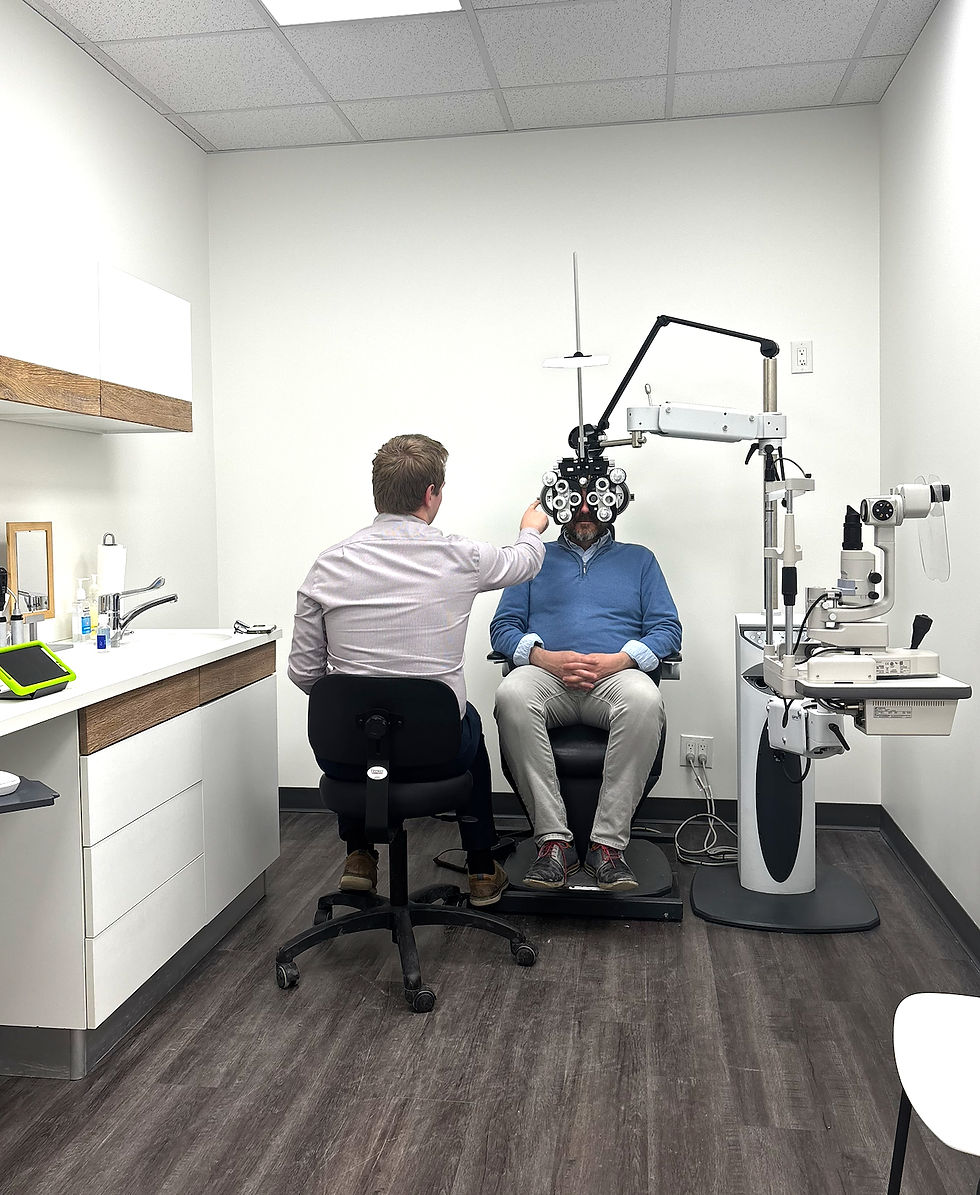
Next, your optometrist will determine your exact prescription. You’ll look through different lenses and compare options:
“Which is clearer, 1 or 2?”
“Better here, or here?”
This process is called refraction, and it helps us fine-tune your vision for maximum clarity and comfort.
A precise prescription can make a noticeable difference in:
Reducing eye strain
Improving focus
Preventing headaches
Enhancing overall visual comfort
6. Binocular Vision Assessment: How Your Eyes Work Together
Seeing clearly is only part of the story, your eyes also need to work together effectively. This part of the exam evaluates:
Eye alignment
Tracking (especially for reading)
Focusing ability
Depth perception
Problems in this area can exist even if your vision seems “fine.” They often show up as:
Losing your place while reading
Eye fatigue
Difficulty concentrating
Avoiding close-up tasks
This is especially important for kids, students, and anyone spending long hours on screens.
7. What Your Optometrist Is Really Looking For
An eye exam isn’t just about whether you need glasses. At Eye Live, we’re assessing multiple aspects of your eye health and vision, including:
Eye Health
Checking for early signs of disease affecting the retina, optic nerve, and other structures.
Vision Quality
How clearly and comfortably you see throughout the day.
Functional Vision
How your eyes perform in real-life situations like reading, driving, or screen use.
Long-Term Risk
Identifying factors that could impact your vision over time.
This comprehensive approach allows us to catch potential issues early and support your vision at every stage of life.
8. How Long Does an Eye Exam Take?
Most comprehensive eye exams take about 30 minutes.This can vary slightly depending on:
Your age
Any specific concerns
Whether additional testing is needed
It’s a small amount of time for a very important check on your health.
Myth: “I See Fine, So I Don’t Need an Eye Exam”
This is one of the most common reasons people delay booking an appointment and one of the biggest misconceptions.
Here’s why:
Many eye conditions have no early symptoms
Diseases like glaucoma can develop without noticeable changes in vision.
Your eyes adapt
Gradual changes often go unnoticed because your brain compensates.
Vision is more than clarity
You can have 20/20 vision and still experience strain, fatigue, or focusing issues.
Early detection is critical
Catching problems early often means simpler, more effective treatment.
Even if everything seems fine, regular eye exams play a key role in protecting your long-term vision.
Final Thoughts
An eye exam is one of the easiest and most effective ways to stay proactive about your health. In just 30 minutes, it can:
Improve your day-to-day comfort and clarity
Detect issues early
Give you peace of mind about your eye health
At Eye Live in Auburn Bay, Calgary SE, our goal is to make the process clear, comfortable, and tailored to you so you always know exactly what’s going on with your vision. Book your exam today!
Frequently Asked Questions
How often should I get an eye exam?
Most adults should have an exam annually. Children, seniors, and those with certain health conditions may need more frequent visits. We understand that most insurance companies fall short when it comes to vision benefits. Ask our team about MyEyeBank to help you save and spread out the cost of your eyecare!
What should I bring to my appointment?
Bring your current glasses or contacts, a list of medications, and any relevant medical history.
Are all the machines necessary?
Each piece of technology provides valuable information about your eye health and helps detect issues early, often before symptoms appear.
What if I don’t need glasses?
Even if you don’t need a prescription, your exam still checks for eye health issues and ensures everything is functioning properly.
Tags: eye exam, what to expect, comprehensive exam, optometrist, Calgary SE

Comments